


Where to Eat in Trapani: Couscous, Busiate and Where to Stay
Where to eat in Trapani? Start with what the sea and the salt pans give this corner of western Sicily: fish couscous with Arab roots, spiral busiate tossed with almond pesto, tuna cured the way the Florio family taught the coast to cure it, and Marsala wine aged a few miles south.
For first-time visitors to Italy, Trapani is an easy base: flat and walkable, with boats to the Egadi Islands leaving from the waterfront and the hilltop town of Erice a cable car ride above.
What to eat in Trapani
- Cuscus alla trapanese: the signature dish. Semolina is worked by hand into small grains, steamed, then soaked in a rich fish broth, often finished with almonds and herbs. It arrived with the Arabs and stayed; nearby San Vito Lo Capo even hosts a couscous festival every September.
- Busiate al pesto trapanese: busiate are long twisted pasta, traditionally rolled around a thin rod. The local pesto is made with fresh tomatoes, almonds, basil, garlic, olive oil and pecorino, lighter and redder than the Genoese version.
- Tuna: bluefin tuna shaped the economy of this coast for centuries. Look for it fresh in season, or preserved as bottarga and under oil.
- Pane cunzatu: "seasoned bread," a split loaf dressed with olive oil, tomato, anchovies, cheese and oregano.
- Rianata: Trapani's own pizza, named for oregano (origanata), with tomato, garlic, pecorino and often anchovies. Bakeries sell it by the slice.
- Cassatelle: fried half-moon pastries filled with sweetened sheep's milk ricotta and cinnamon, sometimes with chocolate chips.
- Genovesi ericine: warm shortcrust pastries filled with custard, the classic sweet of Erice.
Where to eat: the areas to know
Think of Trapani by neighborhoods. The historic center occupies a narrow peninsula, and its pedestrian main street, Corso Vittorio Emanuele, fills up for the evening stroll before dinner. Bakeries, pastry shops and wine bars for an aperitivo cluster here.
Via Garibaldi, lined with old churches and palaces, is quieter by day and comes alive at night, when restaurant tables spill onto the street. At the western tip stands the Torre di Ligny, a 17th-century watchtower; the waterfront around it is the place for a drink at sunset.
The fish market area on the northern seafront is best early in the morning, when the day's catch is laid out and vendors still call out their prices. Simple trattorias nearby cook what comes off the boats; if the menu changes with the catch, you are in the right place.
Salt, tuna and Marsala wine
South of the city, the Riserva Naturale Saline di Trapani e Paceco, managed by WWF Italy, protects about 1,000 hectares of salt pans. Windmills once pumped seawater between the basins, flamingos stop here in spring and fall, and a small Salt Museum sits in the hamlet of Nubia.
The coastal road to Marsala, known as the Via del Sale, runs about 30 kilometers past more salt pans and the shallow Stagnone lagoon. From a landing on the lagoon, small boats cross to Mozia (ancient Motya), an island with the remains of a Phoenician city and the Whitaker museum, home of the marble statue known as the Young Man of Motya.
In Marsala, the historic Cantine Florio, founded in 1833, still welcome visitors for guided tours of the cellars and tastings of Marsala wine. The Florio name also leads offshore: on Favignana, the former Florio tuna fishery is now a museum of industrial archaeology that tells the story of the tonnara and the mattanza, the traditional tuna harvest.
One day: Trapani, Erice and the salt pans at sunset
Morning: walk the fish market early, then have coffee and a slice of rianata in the historic center. Walk out to the Torre di Ligny.
Midday: take the cable car up to Erice, a medieval town about 700 meters above the sea; the ride takes around ten minutes. Lunch on busiate, then stop at Pasticceria Maria Grammatico, founded by a pastry maker trained by the nuns of the San Carlo convent, for genovesi and almond sweets.
Late afternoon: come back down and drive south to the salt pans. Arrive in the hour before sunset, when the light turns the basins pink. Return to Trapani for a couscous dinner.
Practical tips
- Getting there: Trapani-Birgi airport (Vincenzo Florio) is about 18 km from town. Palermo airport has more international connections and is roughly an hour's drive away.
- Ferries: hydrofoils and ferries leave Trapani for Favignana year-round; the fastest crossings take about 30 to 40 minutes.
- When to go: spring and fall are best, with warm days, fewer crowds and flamingos on the salt pans. July and August are hot and busy.
- Meal times: lunch runs roughly from 1 to 3 pm and dinner rarely starts before 8 pm. Book dinner on weekends.
Where to stay near Trapani
We are a small team in the Venice area that selects historic homes one by one; we are not a marketplace, and you book directly with the hotel.
Baglio Oneto dei Principi di San Lorenzo – Marsala (Sicily)
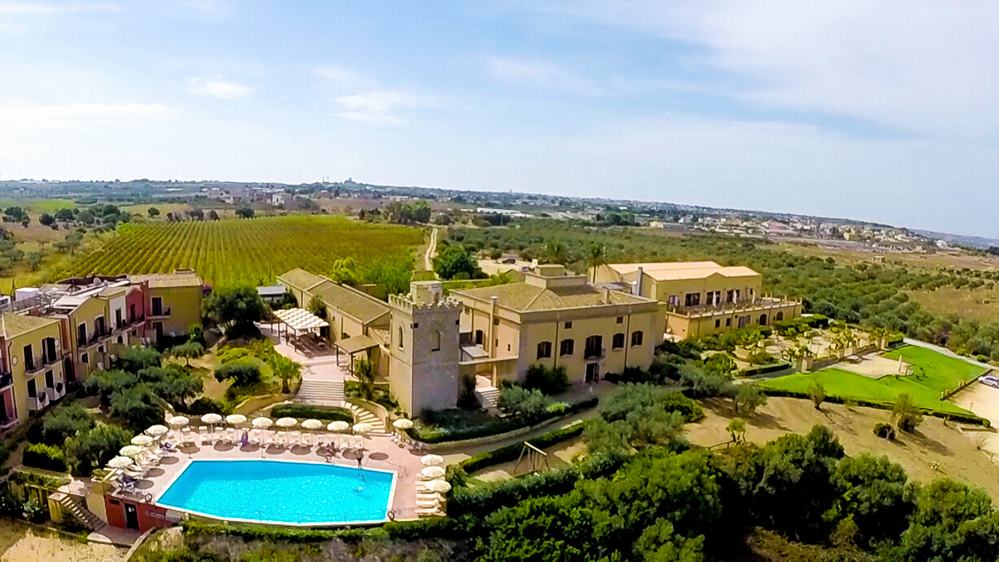
Once the home of a noble family, this five-star wine resort stands on a panoramic hill in Contrada Baronazzo Amafi, outside Marsala, looking over the western coast of Sicily. Olive groves, vineyards, mulberry trees and prickly pears surround the estate, and its sunsets over the sea are the reason many guests return. There is a garden and a solarium terrace, and several dining options. It is a good base for the Florio cellars and the Via del Sale.
Baglio Custera – Marsala (Sicily)
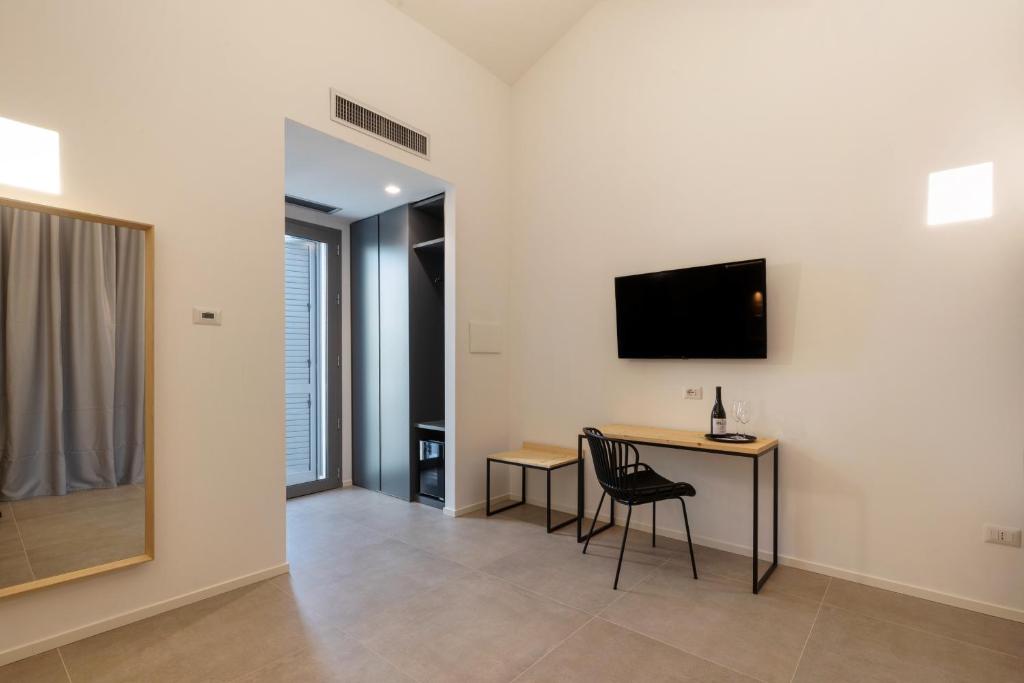
This country house sits on the hill of Rakalia, the ancient Heraclia, where the Phoenicians built an aqueduct to supply the island of Motya. The farmhouse is set in a large olive grove and citrus grove, with views toward the Egadi Islands at sunset. Rooms have a double exposure: the courtyard and its pool on one side, a private outdoor space among the olive trees on the other, with armchairs and a selection of the estate's wines. The restaurant cooks local recipes with the estate's own olive oil.
Hotel Aegusa – Favignana (Sicily)
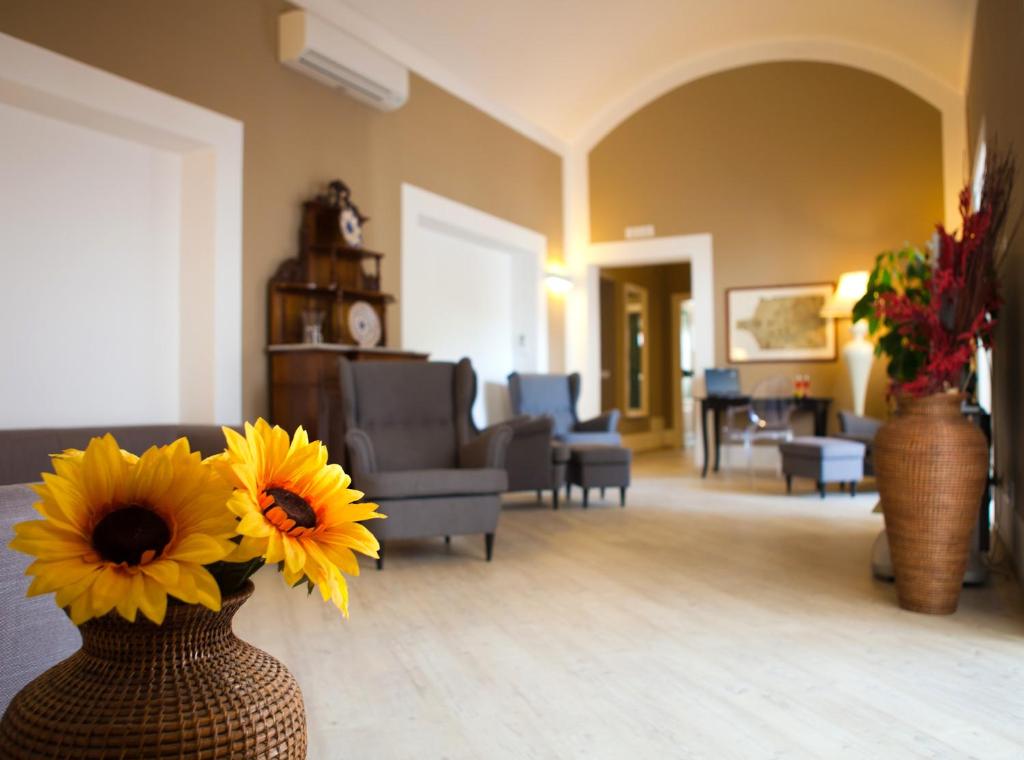
The oldest hotel on Favignana occupies the 19th-century Palazzo Di Giorgi on Via Garibaldi, in the pedestrian center near the main square. In 1999 it added an annex in an early-1800s building that belonged to the Florio tuna fishery. Vaulted ceilings in local sandstone mark the 28 rooms. In the garden, the restaurant Il Giardino dell'Aegusa, led by chef Jean Simonte since 2010, serves fish bought from the island's fishermen. A natural base for the tonnara museum.
Check availability for your dates and book directly with the hotel.
A gift idea
If you know someone who would enjoy a trip like this, the Italy gift card is a digital card they can use for stays and experiences in our collection of historic homes.
Frequently asked questions
What is the most typical dish in Trapani?
Cuscus alla trapanese, hand-rolled semolina with fish broth, followed by busiate with pesto trapanese.
Can I visit Erice and the salt pans in one day?
Yes. Go up to Erice by cable car in the morning, have lunch there, and drive to the salt pans south of Trapani for sunset.
How do I get from Trapani to Favignana?
Hydrofoils and ferries leave from Trapani's port all year; the fastest crossing takes about half an hour.
More ideas for Sicily
Continue east with our guide on where to eat in Palermo, build a route on Plan your trip, browse our experiences or see all our hotels.
Opening photo: the Mura di Tramontana in Trapani, by TrapaneseEricino (CC BY-SA 3.0), via Wikimedia Commons.
- Hits: 92
