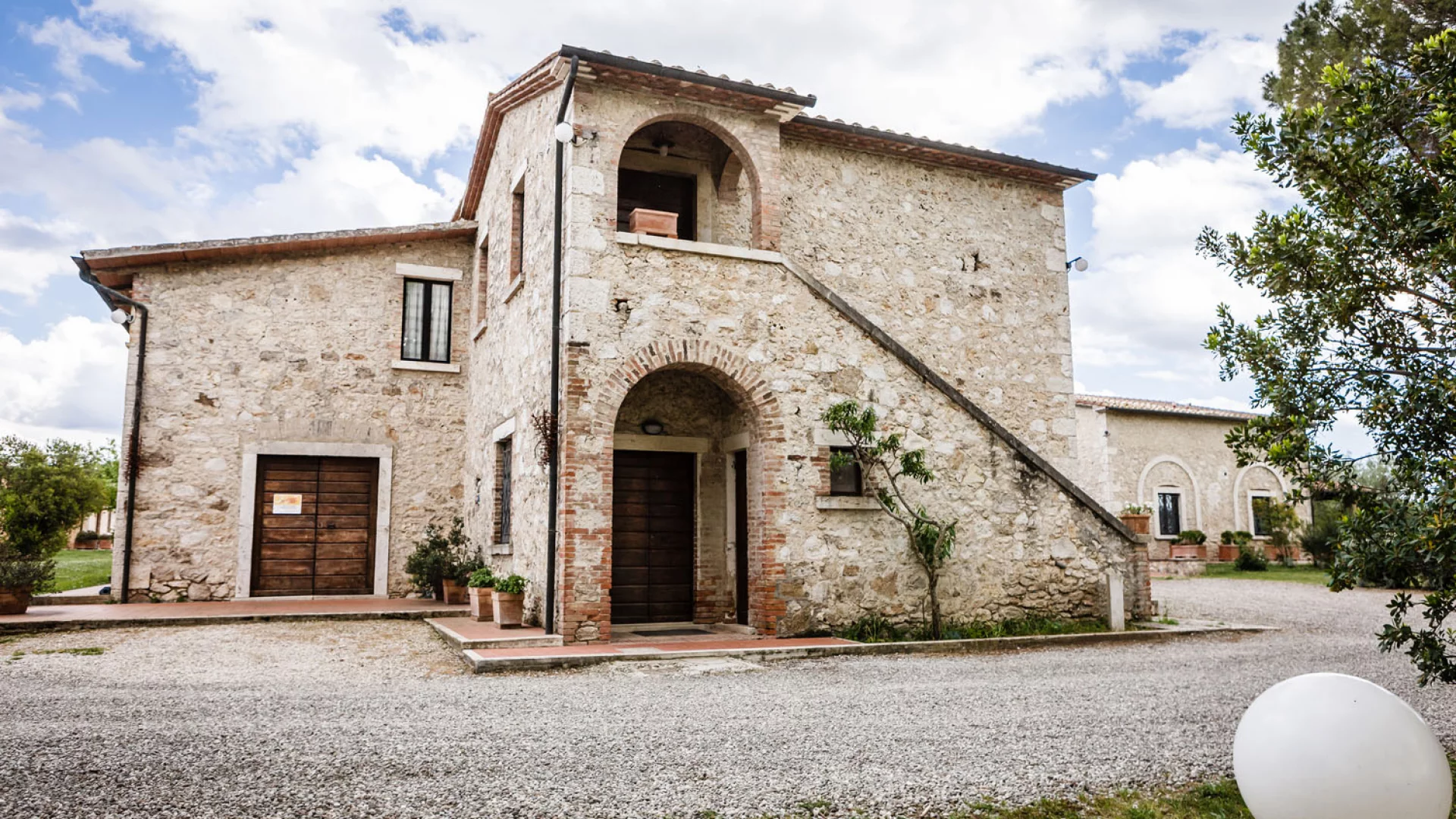
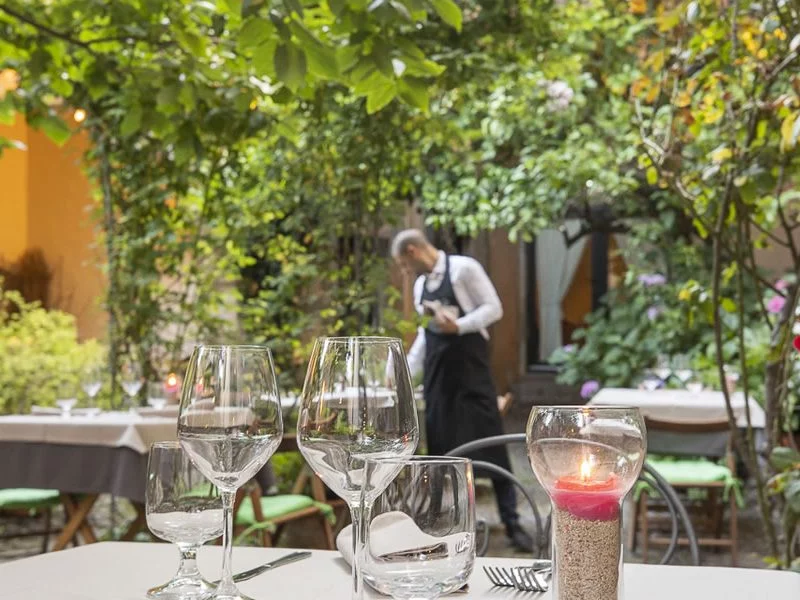
White Truffle Season in Piedmont: A Fall Trip to Alba and the Langhe

White truffle season in Piedmont is the best reason to plan a fall trip to northern Italy. From October 10 to December 6, 2026, the town of Alba hosts its International White Truffle Fair, now in its 96th edition, while the surrounding Langhe hills turn gold and red after the Barolo and Barbaresco harvest.

This guide covers when to go, how the fair works, what a truffle hunt is really like, where to eat, and three historic hotels in the heart of the Langhe where you can base yourself for a few nights.

When is white truffle season?

The white truffle, Tuber magnatum Pico, is harvested in Piedmont from early fall to the end of the year, with the best specimens usually found between late October and November. The Alba White Truffle Fair runs on weekends throughout that period: the heart of it is the World White Truffle Market in the Cortile della Maddalena, where certified truffles are weighed and sold, alongside tastings, cooking shows and wine events.

Prices change every week with the season and the weather, so treat any figure you read in advance as indicative. A few grams shaved over fresh egg pasta at dinner are enough to understand what the fuss is about.

What a truffle hunt is really like

A truffle hunt is less a show than a walk in the woods with someone who has done it all his life. The trifolau leads the way with his dog, often a Lagotto Romagnolo, the breed most used in Italy for its nose and temperament. Truffles grow underground, near the roots of oaks, poplars, willows and lime trees, and there is nothing to see until the dog stops and starts to dig. That is when the hunter steps in with a small spade, the sapin, to lift the truffle out without damaging it or the roots around it.

Hunts usually take place in the morning and last an hour or two. The white truffle is the prize from October to mid-January; outside that window the dogs look for the summer and winter black truffle, less rare but just as good a reason to spend a morning in the woods.

At Foresteria delle Vigne, one of the three hotels in this guide, the hunt takes place in the Bosco dei Pensieri, the last surviving wood of the Barolo Langa, inside a 120-hectare nature reserve on the Fontanafredda estate. The Truffle Hunt in the Land of Barolo experience combines a night at the hotel with a private hunt for two, led by an expert trifolau and his dog.

What to do in the Langhe in the fall

  • Go on a truffle hunt. Local trifolau (truffle hunters) take small groups into the woods with their dogs, usually in the morning. Book a few days ahead and wear shoes you do not mind getting muddy.
  • Taste Barolo where it is made. The villages of Barolo, La Morra and Serralunga d'Alba are 15 to 20 minutes apart. Many wineries receive visitors by appointment only, so plan two visits a day at most.
  • Visit Pollenzo. The former royal estate near Bra is home to the University of Gastronomic Sciences and its Wine Bank, a good stop to understand Piedmont's food culture.
  • Walk a UNESCO landscape. The vineyard landscapes of the Langhe, Roero and Monferrato have been a UNESCO World Heritage Site since 2014: even a short walk between two villages gives you the views.

Where to eat: practical tips

  • The classic dishes: tajarin (thin egg pasta), vitello tonnato, beef tartare and fonduta, all better with white truffle on top.
  • Ask before it is shaved. Truffle is usually priced by the gram and weighed at the table: agree on the amount before the waiter starts.
  • Book weekends early. During the fair, the best-known restaurants around Alba fill up weeks in advance, especially on Saturday nights.

How to get there

Alba is about an hour's drive from Turin airport and around two hours from Milan Malpensa. A rental car is the easiest way to move between villages; if you prefer not to drive after wine tastings, hire a local driver for the day. For a longer route through the region, see our Turin, Langhe and Monferrato journey.

Where to stay in the Langhe

Foresteria delle Vigne – Serralunga d'Alba (Piedmont)
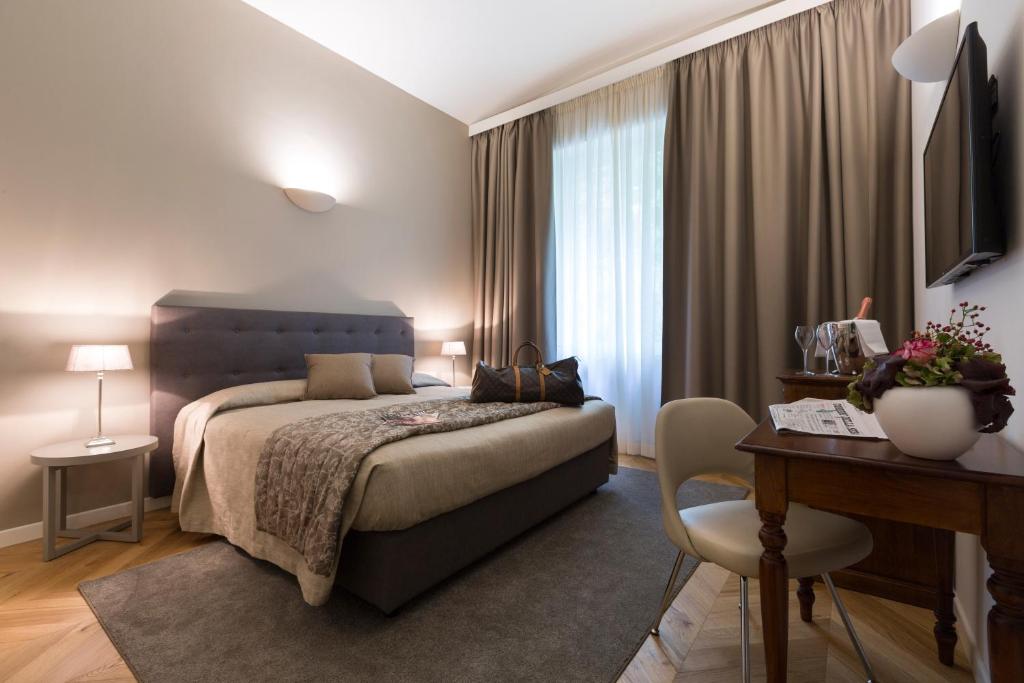
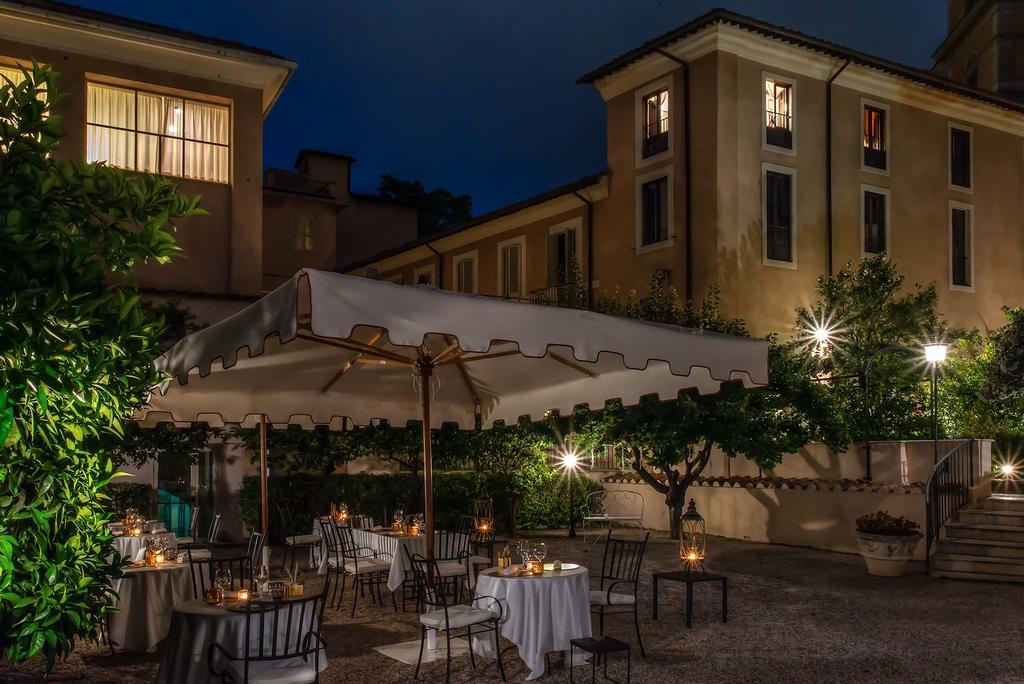
Foresteria delle Vigne in the Villaggio Narrante, Fontanafredda

Built in 1864 and 1865 inside the Villaggio Narrante at Fontanafredda, the historic estate linked to the House of Savoy, a few steps from the Villa Reale. The Foresteria blends its 19th-century architecture with modern comfort and puts you among the vineyards, 15 minutes from Alba.

Le Case dei Conti Mirafiore – Fontanafredda (Piedmont)
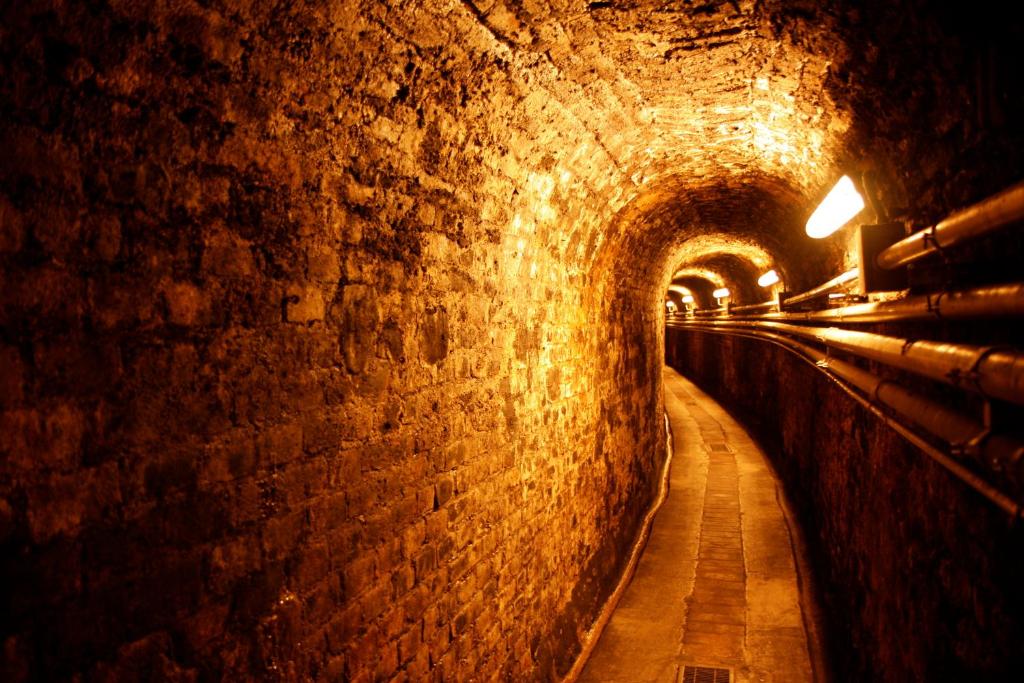
Le Case dei Conti Mirafiore overlooking the vineyards of the Langhe

Also inside the Villaggio Narrante, this four-star hotel occupies the houses built in the 1930s for the estate's workers and their families. Today the rooms look out over the vineyards, and you can walk to the cellars for a tasting before dinner.

Albergo dell'Agenzia – Pollenzo, Bra (Piedmont)
Albergo dell'Agenzia in the royal estate of Pollenzo

In the royal estate of Pollenzo, next to the University of Gastronomic Sciences: 47 rooms and suites named after the great crus of the Langhe and Roero, with coffered ceilings, fireplaces and Savoy-style furniture. A good base for travelers who put food first.

Check availability for your truffle season dates: fair weekends are the first to sell out in the Langhe. Choose your hotel and dates below.

Frequently asked questions

When is the Alba White Truffle Fair in 2026?

From October 10 to December 6, 2026, with the main market and events on weekends.

How many days do I need in the Langhe?

Three nights let you combine the fair, a truffle hunt and two or three winery visits without rushing.

Do I need a car?

It is the easiest option, since villages and wineries are spread across the hills. A private driver is a good alternative on tasting days.

Keep planning

Not sure how to fit Piedmont into your first trip to Italy? Our Plan your trip page can help you build the route, and our journeys connect several historic hotels in one itinerary. We are a small team based near Venice, and you always book directly with the hotel.

  • Hits: 44

Thanksgiving in Italy: A Week in Florence and Chianti

More and more American families are choosing to spend Thanksgiving in Italy, and late November is a better time to visit Tuscany than most people think. The summer crowds are long gone, the hills turn copper and gold, and it is the season of the year's best food: new olive oil straight from the press, white truffles and the first tastings of the new wine. Thanksgiving falls on November 26 this year, so a week from the Saturday before to the Sunday after is easy to plan.

This guide suggests how to split the week between Florence and Chianti, what to eat and book, and three historic places to stay, all with breakfast included.

How to spend Thanksgiving week in Tuscany

Days 1–3: Florence

Start in the city while you are fresh from the flight. See Michelangelo's David at the Accademia, climb Brunelleschi's dome at the Duomo and spend a morning at the Uffizi, all with timed tickets booked in advance. In November, museums are noticeably quieter than in spring, and the evening walk across Ponte Vecchio is yours.

Days 4–7: Chianti

Pick up a rental car and drive 45 minutes south into Chianti Classico, between Florence and Siena. This is the time of the olive harvest: many estates open their mills (frantoi) so visitors can taste the bright green oil on toasted bread. Spend your days between wine cellars, medieval villages such as Radda and Castellina, and a day trip to Siena. On weekends in November, the town of San Miniato hosts its white truffle fair.

Want the full route? Our Florence, Chianti and Siena journey lays it out stage by stage.

Where and what to eat

There is no turkey on Tuscan menus, but a Thanksgiving dinner here can be memorable: ribollita and other bean soups, pappardelle with wild boar ragù, bistecca alla fiorentina, roasted chestnuts and, if you are lucky, fresh pasta with shaved white truffle.

Practical tips. Book your Thursday dinner ahead: Italians do not celebrate Thanksgiving, so restaurants run their normal schedule, but the best trattorias in Florence fill up on weekends. The Florentine steak is priced by weight, usually per 100 grams, and a one-kilogram steak serves two. A small cover charge per person (coperto) is normal. Tipping is not expected as it is in the US; leaving a few euros for good service is appreciated.

Where to stay for Thanksgiving in Tuscany

Loggiato dei Serviti – Florence

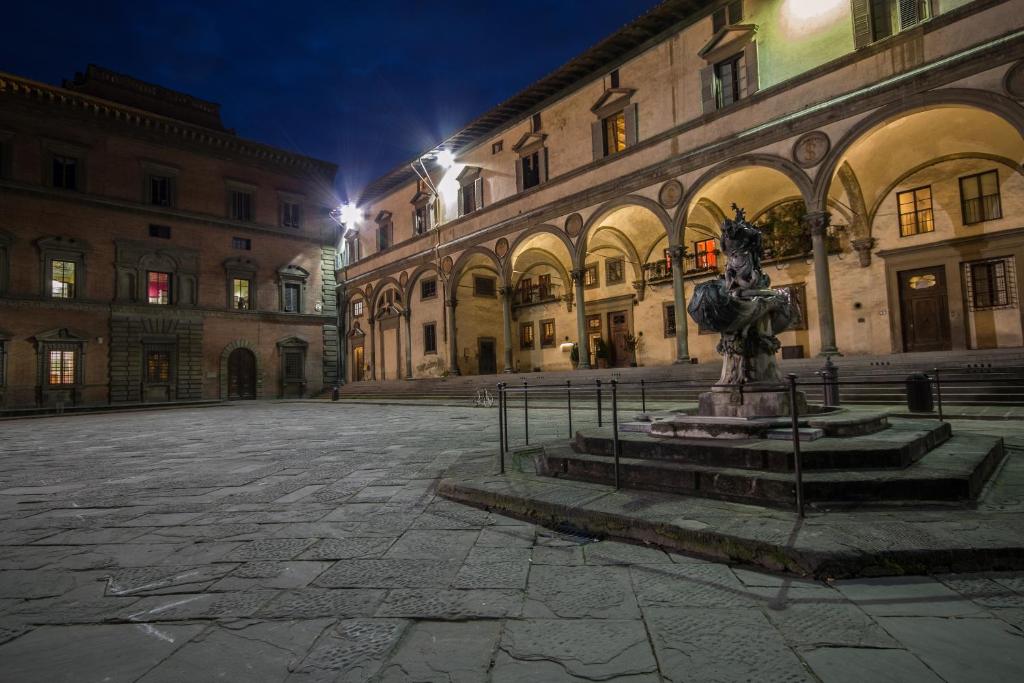
Piazza Santissima Annunziata in Florence with the Loggiato dei Serviti

A 15th-century building on Piazza Santissima Annunziata, one of the most harmonious Renaissance squares in Florence, 150 meters from the Accademia and a short walk from the Duomo. Rooms are furnished with antiques and breakfast is included. The ideal base for your first nights, with everything within walking distance.

Borgo Vescine – Radda in Chianti

A medieval hamlet surrounded by vineyards and olive groves in the heart of Chianti Classico, now a five-star country hotel. It offers wine tastings and cooking classes on site, a restaurant, and a heated outdoor pool. Breakfast is included. A good choice if you want your Thanksgiving week to include a hands-on Tuscan cooking lesson.

Castello di Fonterutoli – Castellina in Chianti

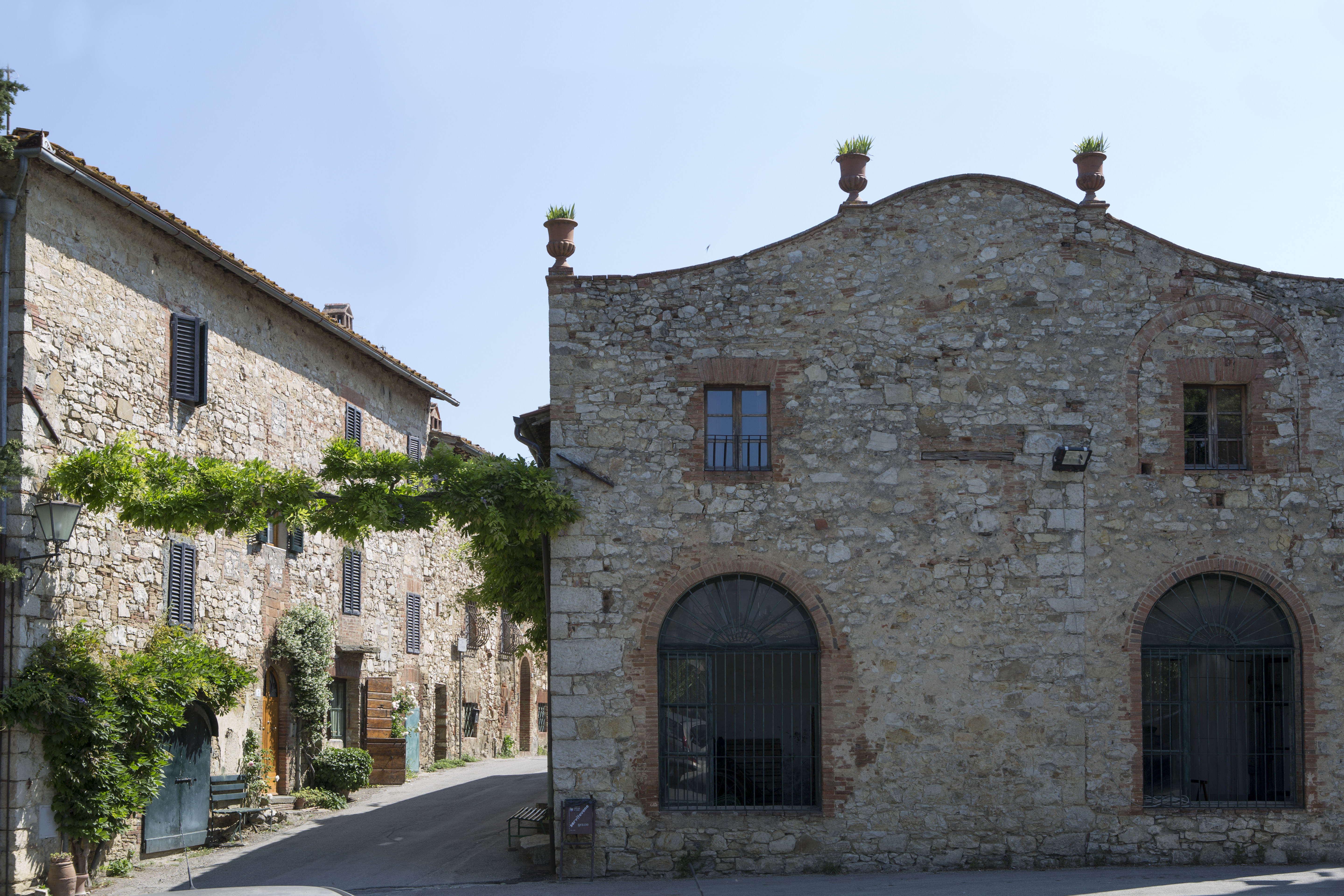
Stone buildings of the medieval village of Fonterutoli in Chianti

A medieval village on the road between Castellina and Siena, home to the Mazzei family's wine estate. Rooms are spread across the historic stone houses, and guests can join guided tours of the winery. Breakfast is included. Perfect for wine lovers and for easy day trips to Siena.

Check availability for Thanksgiving week. Rooms in historic Tuscan properties are limited, and late November fills with travelers who know the season. Choose a hotel and your dates below to see live rates. You book directly with the hotel: no booking fees.

Frequently asked questions

Is November a good time to visit Italy?

Yes, for travelers who prefer food and culture to beaches. Tuscany is quieter, prices are lower than in spring, and it is the season of new olive oil and white truffles.

What is the weather like in Tuscany in late November?

Cool and changeable: daytime highs around the mid-50s °F (12–14 °C), colder nights in the hills, and some rain. Pack layers and a waterproof jacket.

Do I need a car in Chianti?

Yes. Florence is best on foot, but Chianti's villages and wineries are spread across the hills. Pick up your car when you leave the city, not before.

Plan the rest of your trip

Explore more historic hotels in Tuscany, or tell us about your trip in Plan your trip. We are a small team in the Venice area, and we help you book directly with each hotel.

Cover photo: Lauramcr92, CC BY-SA 4.0, via Wikimedia Commons

  • Hits: 55
A cup of gelato at Giolitti in Rome

Best Gelato in Rome: 8 Gelaterie to Try

The best gelato in Rome is not the neon-bright tower piled behind a tourist counter near the Trevi Fountain. It is dense, made fresh that morning, coloured only by its own ingredients, and served from a modest tub by someone who talks about pistachio the way a sommelier talks about wine. Finding it is one of the quiet pleasures of a Roman summer — a reason to slow down, walk a little further, and taste the city one scoop at a time.

Rome rewards the curious. Behind Piazza Navona, along the cobbles of Via dei Coronari, across the river in Trastevere and up towards the Quirinale, a handful of gelaterie artigianali have built their reputation on seasonal fruit, real Bronte pistachio and daily-changing flavours. In this guide we have gathered eight of the best, grouped by neighbourhood so you can plan your walk — and we have paired them with two historic residences in the heart of Rome where you can rest between scoops.

Whether you are here for a long weekend or a slow week, this is how to eat gelato like a Roman, and where to stay so the best addresses are just a short stroll from your door.

Traditional Italian gelateria with brass-covered tubs

In a real gelateria, gelato is kept flat in covered tubs. Photo: rabendeviaregia, CC BY-SA 2.0, via Wikimedia Commons.

The best gelaterie in Trastevere

Trastevere, with its ivy-clad lanes and golden evening light, is where Rome feels most itself — and it happens to hold some of the city's finest artisanal gelato.

Otaleg

"Gelato" spelled backwards, because founder Marco Radicioni does everything a little differently. The flavours change daily according to what the market offers, and the pistachio is regularly named among the best in the city. Intense, seasonal and quietly experimental, Otaleg is a favourite of Roman gelato lovers rather than passing crowds.

Fior di Luna

A tiny, artisan workshop on Via della Lungaretta that has been making gelato in small batches for decades, using whole ingredients and single-origin chocolate. Reliably delicious, friendly and unpretentious — exactly the kind of place locals return to.

Fatamorgana

The pioneer of creative, all-natural gelato in Rome, with a Trastevere branch among its addresses. Everything is gluten-free and made without artificial colours or flavourings, and the inventive combinations — think pear and gorgonzola, or basil, walnut and honey — sit happily beside impeccable classics.

The best gelaterie in the historic centre

From the Pantheon to the Quirinale, the centro storico hides a few genuine gems among the many forgettable counters.

Giolitti

A Roman institution since 1900, a few steps from the Pantheon on Via degli Uffici del Vicario. Grand, marble-countered and gloriously old-fashioned, Giolitti is part gelateria, part living history — order at the till, then hand your receipt to the counter and choose.

A cup of gelato at Giolitti in Rome

A cup of gelato at Giolitti, Rome. Photo: Sv32000, CC BY-SA 4.0, via Wikimedia Commons.

Gelateria del Teatro

Tucked on Via di San Simone, just off pedestrian Via dei Coronari between Piazza Navona and the river. Everything is produced on site and in full view, with delicate flavours built around herbs, fruit and flowers — raspberry and sage, or white chocolate and basil.

The lane leading to Gelateria del Teatro, Rome

The picturesque lane by Gelateria del Teatro, off Via dei Coronari. Photo: Vadim Zhivotovsky, CC BY 3.0, via Wikimedia Commons.

San Crispino

Via della Panetteria 42, a short walk from the Trevi Fountain and a rare quality address in an area thick with tourist traps. Purist to the core: gelato served only in cups (never cones, so as not to mask the flavour), with a legendary honey variety.

Come il Latte

A short walk from Villa Spalletti Trivelli, towards Via XX Settembre, this modern favourite is built around exceptional milk and cream, with fresh fillings and a chocolate fountain for dipping your cone. Silky, rich and consistently excellent.

Gelateria dei Gracchi

The finest traditional gelateria in Prati, a short hop across the river near the Vatican — ideal after a morning at St Peter's. Making gelato since 1995 with an unwavering commitment to quality and seasonal ingredients, with a superb nocciola and fruit sorbets that taste of the orchard.

How to spot real artisanal gelato

Not every counter in Rome is worth your time. A few simple signs separate the real thing from the tourist version:

  • Colour: real pistachio is a dull khaki-green, not bright emerald; banana is grey, not yellow. Natural gelato has muted, honest colours.
  • Shape: quality gelato is stored flat in covered tubs, not whipped into fluffy, gravity-defying mountains.
  • Seasonality: look for a short, changing list of flavours. Fresh fruit that follows the season is a very good sign.
  • Location of production: the best places make their gelato on site — "produzione propria" or a visible laboratory is what you want to see.

Where to stay in Rome: two historic residences

Half the pleasure of a gelato crawl is the walk between stops — which is far sweeter when your base is a beautiful historic home rather than an anonymous hotel. Dimore d'Epoca gathers a selection of Italy's most characterful stays; in Rome, two addresses put the best gelaterie within an easy stroll.

Donna Camilla Savelli – Trastevere, Rome

Donna Camilla Savelli, historic monastery hotel in Trastevere, Rome

Not just a hotel but an architectural jewel: a 17th-century Baroque monastery at the foot of the Janiculum Hill, its majestic cross vaults, fine stuccoes and quiet cloistered garden preserved intact. The rooms were created from the former monastic cells — serene, air-conditioned and blissfully removed from the traffic, yet moments from the heart of Trastevere. Breakfast in summer is served in the internal garden, where peace reigns. Step out of the door and Otaleg, Fior di Luna and Fatamorgana are all within a gentle walk. See the property on Donna Camilla Savelli.

Villa Spalletti Trivelli – Quirinale, Rome

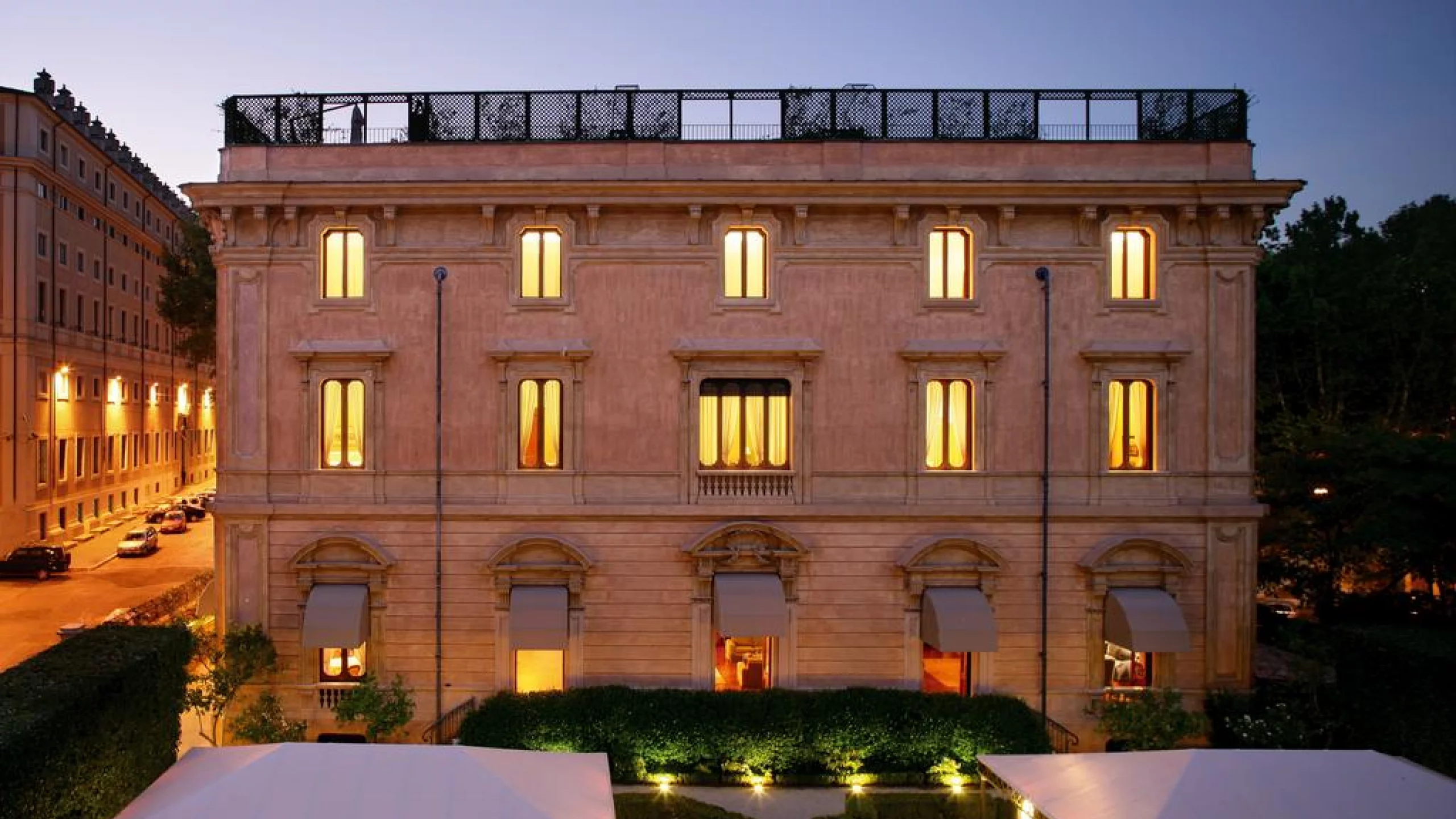
Villa Spalletti Trivelli, aristocratic historic villa on the Quirinale, Rome

The private home of the Counts Spalletti Trivelli since the early 20th century, this aristocratic villa sits on the Quirinale, one of Rome's original seven hills, a hundred metres from the Quirinale gardens and minutes from the Trevi Fountain. Twelve elegant rooms, a historic library of more than 10,000 volumes, a spa and a rooftop garden with Jacuzzis and views across the rooftops of the Eternal City make it a discreet, romantic retreat. Come il Latte and San Crispino are a short walk away, with Giolitti and Gelateria del Teatro an easy stroll into the centre. Discover Villa Spalletti Trivelli.

Both belong to the Villas & Palaces collection of Dimore d'Epoca — historic residences chosen for their character, location and quiet luxury.

Planning your gelato walk? Check live availability at our historic hotels in Rome and book directly with the property.

Frequently asked questions

Where is the best gelato in Rome?
Rome's best artisanal gelaterie are spread across the city. In Trastevere, Otaleg, Fior di Luna and Fatamorgana stand out; in the historic centre, Giolitti (near the Pantheon), Gelateria del Teatro (near Piazza Navona) and San Crispino (near the Trevi Fountain) are reliably excellent.

How do I recognise real artisanal gelato?
Look for muted, natural colours, gelato stored flat in covered tubs rather than piled into tall peaks, a short seasonal flavour list and production on site ("produzione propria"). Bright colours and towering mounds usually signal mass-produced, tourist-oriented gelato.

Where should I stay in Rome to be near the best gelaterie?
Two historic residences by Dimore d'Epoca are ideally placed: Donna Camilla Savelli, a former monastery in Trastevere close to Otaleg and Fior di Luna, and Villa Spalletti Trivelli on the Quirinale, a short walk from San Crispino, Come il Latte and the gelaterie of the centre.

Plan your sweetest weekend in Rome

Gelato is best enjoyed unhurried, with time to wander between one address and the next. Base yourself in a historic residence in the heart of the city, and every scoop becomes part of the walk. Explore all the historic stays in Rome and across Italy with Dimore d'Epoca, and discover the experiences that turn a weekend into a memory.

  • Hits: 41

Christmas in Rome: Where to Stay, What to Book and What to Expect

Christmas in Rome is quieter than you might expect and more moving than most people imagine. The summer crowds are gone, the churches bring out their nativity scenes, and the whole city slows down around family tables. If you are planning a December trip from the US, now is the right moment: flights and the best rooms in the historic center are booked eight to ten weeks ahead.

This guide covers how Rome celebrates from December 8 to January 6, what to reserve before you fly, where to eat when half the city is closed, and three historic hotels in Trastevere and the center, all with breakfast included.

How Rome celebrates the holidays

The season opens on December 8, the Feast of the Immaculate Conception, a national holiday. That afternoon the Pope traditionally pays homage to the Virgin at the column in Piazza di Spagna, and many families put up their tree and nativity scene the same day.

  • Nativity scenes (presepi): nearly every church has one, from the large display in St. Peter's Square to small handmade scenes in Trastevere. Walking from church to church is a Roman holiday tradition.
  • Piazza Navona: the square hosts a Christmas market with stalls, sweets and a carousel through the Epiphany.
  • Christmas Eve and Day: Midnight Mass at St. Peter's requires free tickets requested well in advance; the Pope's Christmas blessing Urbi et Orbi is given from the basilica balcony at noon on December 25.
  • January 6: the Epiphany, when the Befana brings gifts to children, closes the season.

What to book before you fly

  • Vatican Museums and Sistine Chapel: timed tickets only; check holiday closures, which vary each year.
  • Colosseum and Roman Forum: timed entry, and the site closes on December 25 and January 1.
  • Christmas Eve and Christmas Day dinner: many restaurants close or serve a fixed family menu. Reserve as soon as your dates are set.
  • Your hotel: the week between Christmas and New Year's is the busiest of the winter. Rooms in historic buildings are few, so they go first.

Where to eat in Rome in December

Winter is the season for Rome's comfort food: cacio e pepe, carbonara, carciofi alla giudia in the Jewish Ghetto, and slow-cooked oxtail. On Christmas Eve Romans traditionally eat fish; on the 25th, stuffed pasta in broth and roast meats.

Practical tips. Italians dine late: many trattorias open for dinner around 7:30 pm and fill up after 8:30. A small cover charge (coperto) per person is normal and legal. Tipping is not expected as it is in the US; rounding up or leaving a few euros for good service is appreciated. Around the holidays, Trastevere and the streets near Campo de' Fiori stay lively when other neighborhoods are closed.

Where to stay in Rome at Christmas

Donna Camilla Savelli – Trastevere, Rome

Evening in the courtyard of Donna Camilla Savelli, a former monastery in Trastevere

A 17th-century Baroque monastery turned hotel, in the heart of Trastevere. The cloister and inner garden keep the calm of the original building, a few minutes' walk from Santa Maria in Trastevere and within reach of the Vatican. Breakfast is included, and small pets are welcome. A good choice if you want the neighborhood where Romans actually spend their holiday evenings.

Hotel Lunetta – Campo de' Fiori, Rome

Steps from Piazza Navona and Campo de' Fiori, Hotel Lunetta puts the Christmas market at your door. Guests have free use of the spa, and the rooftop terrace looks out over the domes of the historic center. Breakfast is included. Ideal for travelers who want to do everything on foot.

Villa Spalletti Trivelli – Quirinale, Rome

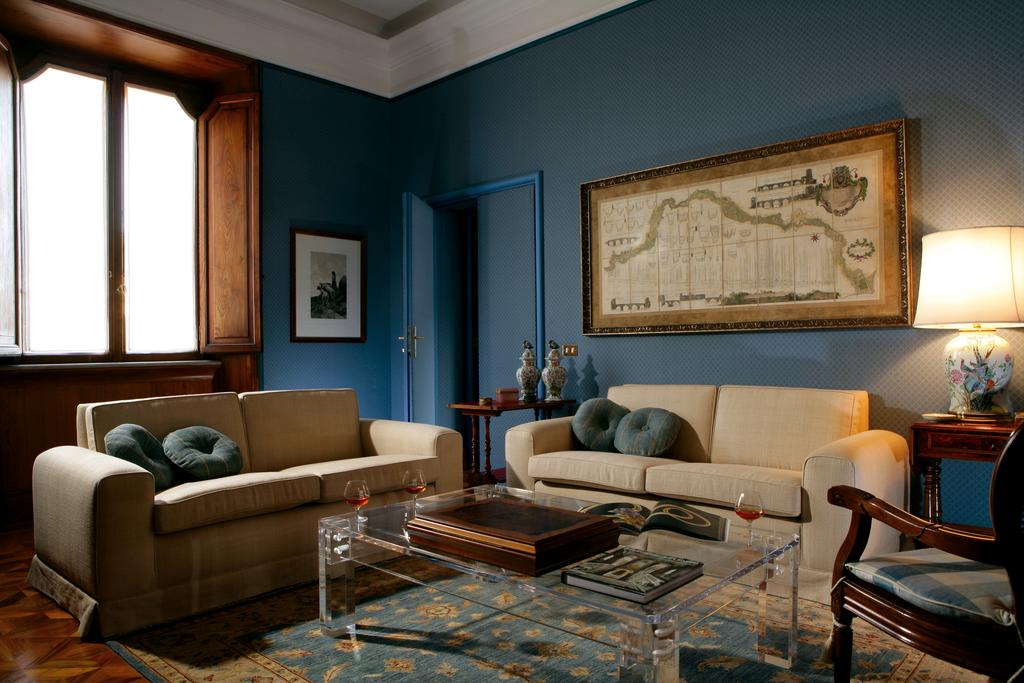
Drawing room with antique furniture at Villa Spalletti Trivelli in Rome

A historic family villa with a private garden, 200 meters from the Quirinale Palace. The rooms mix antiques with modern comfort, and a wellness area helps after long days of walking. Breakfast is included. This is the quietest of the three, for travelers who prefer a private-house feel to a hotel lobby.

Check availability for your dates. Christmas week and New Year's sell out first in Rome's historic hotels. Choose a hotel and your dates below to see live rates. You book directly with the hotel: no booking fees.

Frequently asked questions

Is Rome crowded at Christmas?

Less than in spring or summer. The busiest days are December 8 and the week between Christmas and New Year's; the first half of December is the calmest period.

What is the weather like in Rome in December?

Mild by US standards: daytime highs are usually in the mid-50s °F (around 13 °C), with cool evenings and some rainy days. A warm coat and comfortable shoes are enough.

Are museums open on Christmas Day?

Most state museums and the Colosseum are closed on December 25 and January 1. Plan the big sights for the days before and after.

Plan the rest of your trip

Rome pairs well with a few days in Tuscany or on the Amalfi Coast. See our historic hotels in Rome, or tell our team what you have in mind in Plan your trip: we are based in the Venice area and help you book directly with each hotel.

Cover photo: Mitravabanerjee, CC BY-SA 3.0, via Wikimedia Commons

  • Hits: 47

Stargazing in Italy: 5 Best Places to Sleep Under the Stars

Some nights stay with you not because of the bed, but because of the sky above it. Stargazing in Italy is one of those simple, powerful pleasures the summer still offers: away from the glow of the cities, in the mountains, the deep countryside and the islands, real darkness survives — the kind where the Milky Way returns to the naked eye and shooting stars streak across a warm August night.

Historic homes are often the perfect place to find it. Built in isolated, panoramic settings — an Alpine pass, a hilltop farmhouse, an estate among the vineyards — they combine everything a starry night needs: clean air, open horizons and the comfort of a warm welcome, so you can end the day looking up with a good glass in hand.

In this guide we've chosen five of the best destinations in Italy for a night under the stars, from the Dolomites to inland Sardinia, each paired with a historic stay from the Dimore d'Epoca collection. Read on for where to go, when to visit and how to make the most of the darkest, most beautiful skies in the country.

Where to see the stars in Italy: 5 top destinations

1. The Dolomites, Trentino – Rifugio Cereda

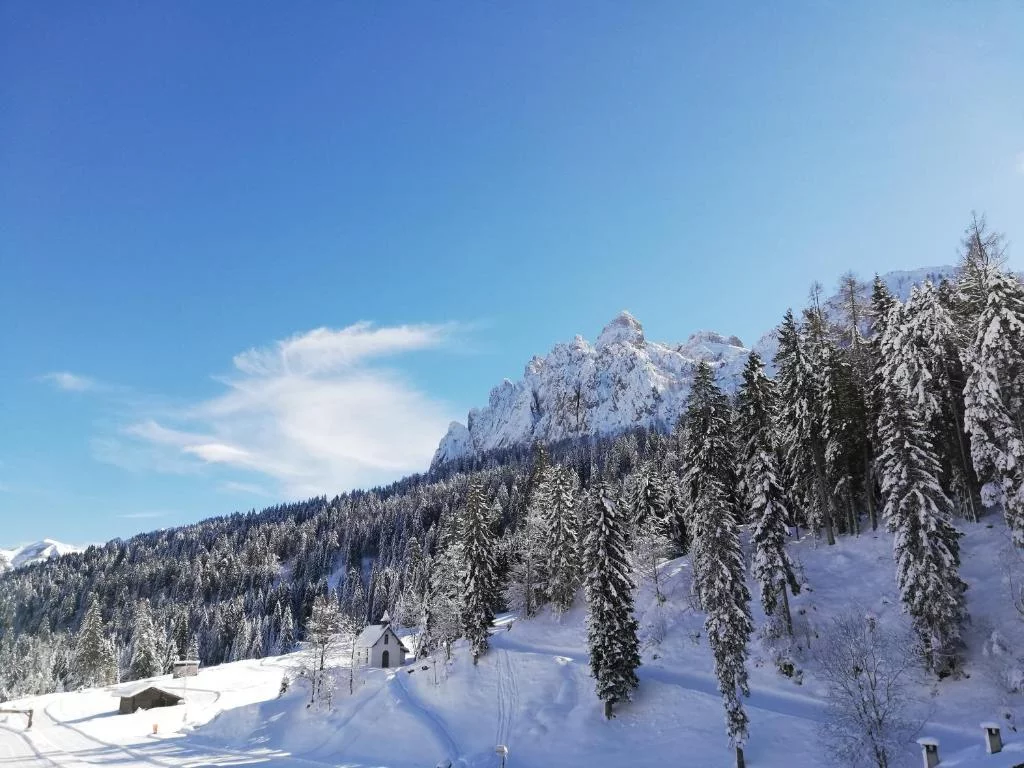
Rifugio Cereda, Cereda Pass in the Dolomites (Trentino)

At 1,369 metres, at the foot of the Pale di San Martino, the Rifugio Cereda is real mountain hospitality, still family-run by the historic Iagher family. The Cereda Pass is an unspoilt place — inhabited only since the early twentieth century — where silence and clean Alpine air make for some of the clearest night skies in the country. Spend the day hiking among the peaks and the evening by the warmth of the refuge; then step outside the door and the stars do the rest. It's an ideal base for anyone who wants the high Dolomites and a sky without rivals.

2. Tuscia and the Tiber Valley, Lazio – Il Torrino del Povile

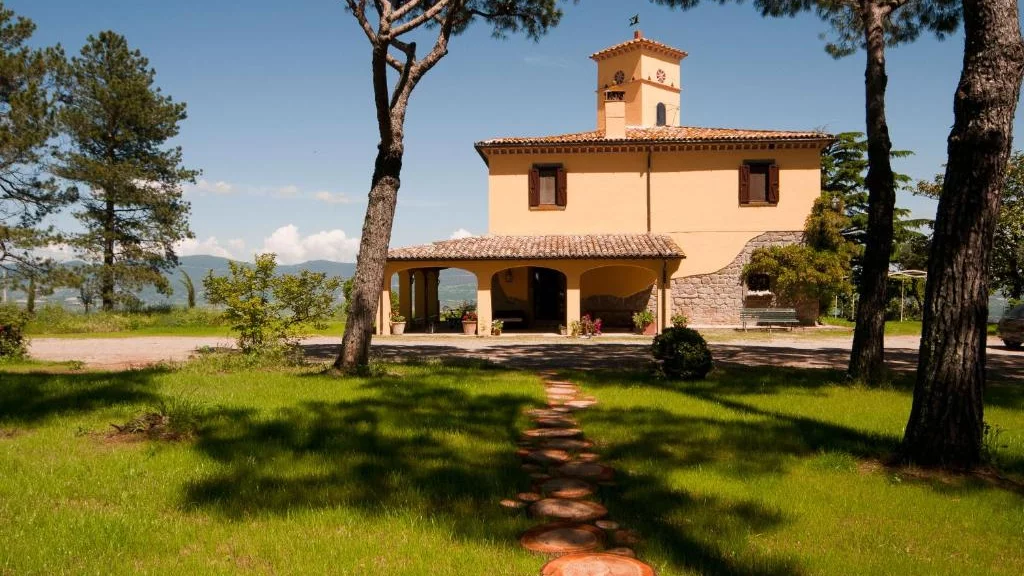
Il Torrino del Povile, Teverina in the Tuscia (Lazio)

On the top of a hill in the heart of the Teverina, Il Torrino del Povile is an ancient square-plan farmhouse overlooking the Tiber Valley, with views stretching from Monte Soratte to Lake Alviano. Set in 17 hectares of organically farmed nature, it is certified among "The Most Beautiful Skies in Italy" — offering a starry sky like few others in the country. Falling asleep here means doing so under one of the clearest night skies in Italy, then waking to a genuine farm-to-table breakfast. For a stargazing trip, it's about as close as it gets to a guarantee.

3. The Maremma and rural Tuscany – Villa Acquaviva

Villa Acquaviva, wine resort in Tuscan Maremma (Grosseto)

In the heart of the Tuscan Maremma, among vineyards and the trails of a centuries-old park, Villa Acquaviva is an elegant wine resort where a noble villa and two historic farmhouses hold twenty-five romantic rooms. Days pass between farm-to-table dishes at the La Limonaia restaurant, tastings in the cellar, the pool and the nearby Terme di Saturnia hot springs. But the evening is the best part: as the sun sets over the rolling Maremma hills, the wide sky above the vines fills with stars — a glass of estate wine in hand the sweetest way to close the day.

4. Inland Sardinia – Antica Dimora del Gruccione

Antica Dimora del Gruccione, widespread hotel in Santu Lussurgiu (Sardinia)

Away from the coast and its lights, in the Montiferru highlands of Santu Lussurgiu, the Antica Dimora del Gruccione is a "widespread hotel" gathered around an eighteenth-century patrician residence, still cared for by the original family. Oak beams, wrought iron, stone vaults and antique furnishings tell of an authentic, inland Sardinia far from the beaten track. With few rooms and a flower garden where dinner is served outdoors in summer, it's an intimate base for discovering the villages and woods of the Montiferru — and for ending the evening under the clear skies of the island's interior.

5. The Apennines of Abruzzo and Umbria

Italy's central mountains hide some of its darkest skies. The high plateaus and national parks of Abruzzo — one of the greenest, least light-polluted regions in the country — and the wooded hills of Umbria are perfect for anyone who wants silence, nature and a sky full of stars, without straying far from art cities and medieval villages. Here you'll find monasteries, hermitages and country houses turned into charming stays: browse the country houses in the collection to find a base immersed in the green heart of Italy.

When to go stargazing in Italy

Summer is the best season: the nights are mild and clear and, between late July and August, the sky fills with shooting stars. The peak of the Perseids, around 10–12 August, is the perfect occasion for a night with your eyes on the sky. Choose the nights around a new moon, when less moonlight lets the stars shine at their brightest.

Tips for a perfect night under the stars

  • Pick a new or waning moon: less moonlight means far more visible stars.
  • Check the forecast: clear skies and dry air, often after a storm, give the sharpest views.
  • Let your eyes adjust: it takes about twenty minutes in the dark before the sky reveals its full depth.
  • No telescope needed: in truly dark places the Milky Way and main constellations are visible to the naked eye; a simple pair of binoculars is a bonus.
  • Book ahead: refuges and homes deep in nature have few rooms and fill up fast in high season.

A gift idea: a night under the stars

A night immersed in nature also makes a wonderful gift. Among the gift boxes by Dimore d'Epoca, Weekend di Relax is ideal for anyone dreaming of two quiet days far from the city, to be enjoyed whenever they like within the following twelve months. And to enrich the stay, take a look at the experiences available in our properties.

Frequently asked questions

Where can you sleep under the stars in Italy?
Among the Dimore d'Epoca properties are the Rifugio Cereda in the Dolomites, Il Torrino del Povile in the Tuscia (Lazio) — certified among "The Most Beautiful Skies in Italy" — Villa Acquaviva in the Tuscan Maremma and the Antica Dimora del Gruccione in inland Sardinia: historic homes immersed in nature, far from city lights.

When is the best time for stargazing in Italy?
Summer is the most favourable season: mild, clear nights and, between late July and August, plenty of shooting stars. The peak of the Perseids, around 10–12 August, is the perfect moment for a night under the sky.

Do you need a telescope to enjoy the night sky?
No. In dark places such as the mountains or the deep countryside, the Milky Way and the main constellations are visible to the naked eye. Just move away from the lights and let your eyes adjust to the dark; a simple pair of binoculars is enough.

Plan your night under the Italian sky

From the Dolomites to the Maremma, by way of the heart of Sardinia, sleeping under the stars in a historic home is the most authentic way to experience an Italian summer: silence, nature and a sky that still amazes. Choose your stay among the country houses of Dimore d'Epoca, or browse all the properties and experiences in the collection.

  • Hits: 161

Our newsletter

Letters from Italy's historic homes

Every two weeks, one house, one region, and the customs and small facts that guidebooks skip. Free, in your inbox.

Dimore D'Epoca is a brand of Hyper srl | C.trà Riale, 13/a - 36100 Vicenza - Italia | P.IVA e C.F. 02372320248 | Aut. 3986
Booking office This email address is being protected from spambots. You need JavaScript enabled to view it. | Affiliations office This email address is being protected from spambots. You need JavaScript enabled to view it. | Information office This email address is being protected from spambots. You need JavaScript enabled to view it.


© Dimore D'Epoca. All rights reserved. Realized by Web Surfers.